
What is AI in Supply Chain?
AI in supply chain refers to the use of machine learning, predictive analytics, natural language processing (NLP), and optimization algorithms to improve decision-making across planning, sourcing, manufacturing, and logistics.
In simple terms:
AI enables supply chains to predict what will happen, recommend what to do, and automate execution.
Today, AI is already embedded in high-performing supply chains—powering everything from demand forecasting and inventory optimization to intelligent routing and supplier risk management.
Why AI is Important in Modern Supply Chains?
Modern supply chains face constant disruption—from geopolitical risks to demand volatility and supply shortages.
AI helps organizations:
- Respond faster to disruptions with real-time insights
- Reduce dependency on manual planning and spreadsheets
- Improve forecast accuracy in uncertain markets
- Optimize costs while maintaining service levels
- Increase agility across global operations
Without AI, most supply chains remain reactive. With AI, they become predictive and resilient.
End-to-End Supply Chain Transparency with AI
Traditionally, supply chains were siloed: procurement didn’t talk to logistics, planning was isolated from manufacturing. But with AI, organizations can gain true end-to-end visibility.
Here’s how:
- Unified data lake powered by ERP, WMS, TMS, CRM inputs.
- Real-time alerts and anomaly detection
- Cross-functional decision-making powered by predictive models
- Scenario simulations to assess impact of variables like strikes or port delays
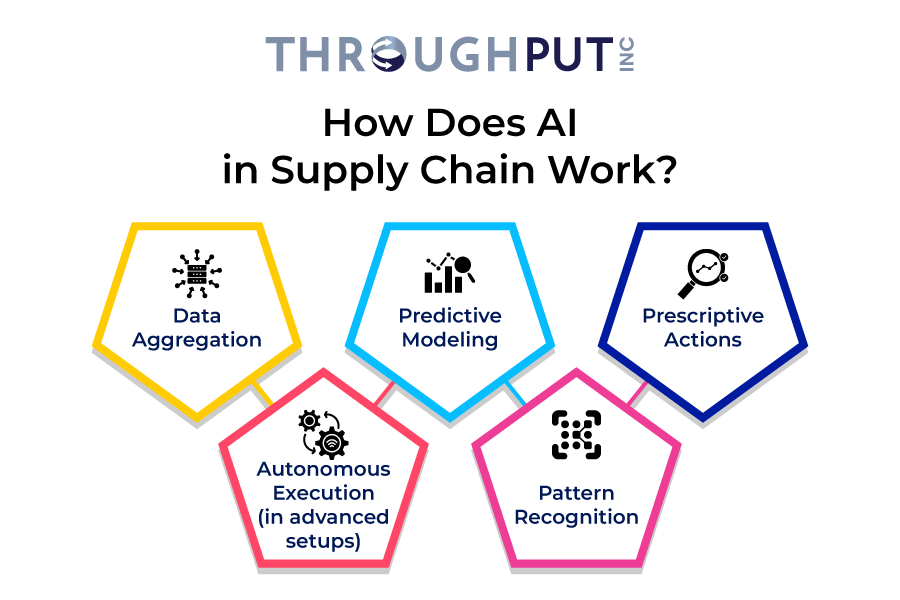
How Does AI in Supply Chain Work?
1. Data Aggregation
AI ingests data from multiple sources:
- ERP, WMS, TMS, CRM systems
- Supplier and procurement data
- IoT sensors and production logs
- External data like weather, news, and market trends
2. Pattern Recognition
Machine learning models analyze historical and real-time data to detect:
- Demand trends and seasonality
- Supply disruptions
- Hidden inefficiencies
3. Predictive Modeling
AI forecasts future outcomes such as:
- Demand spikes or drops
- Inventory shortages
- Supplier delays
4. Prescriptive Recommendations
AI suggests optimal actions:
- Adjust inventory levels
- Reroute shipments
- Switch suppliers
5. Autonomous Execution (Advanced AI)
In mature systems, AI can automatically:
- Trigger replenishment orders
- Adjust production schedules
- Optimize delivery routes

Benefits of AI in Supply Chain
Here are some measurable benefits companies gain with AI-driven supply chains:
| Benefit | Impact |
| Reduced Inventory Holding Costs | 20–50% decrease with better forecasts and replenishment |
| Faster Response Time | 60% improvement in reaction to disruptions |
| Fewer Stockouts & Overstock | 30% optimization in demand-supply balancing |
| Improved Logistics Routing | Up to 25% cost savings through route optimization |
| Sustainability Gains | Lower fuel usage, energy consumption, and waste |
| Higher Profit Margins | AI identifies hidden cost drains and fixes them |
Challenges of Implementing AI in Supply Chain
Even with the immense upside, implementing AI isn’t plug-and-play:
- Poor Data Quality & Fragmentation
- Lack of Internal Expertise or Data Teams
- Resistance to Change Among Supply Chain Teams
- Difficulty Integrating with Legacy Systems
- Unclear ROI if KPIs Aren’t Set
What is Generative AI in Supply Chain?
Generative AI (GenAI) in supply chain goes beyond prediction. It creates new strategies, simulations, or recommendations using deep learning and large language models (LLMs).
Example Use Cases:
- Create AI-generated replenishment strategies
- Simulate alternative supplier plans in seconds
- Auto-generate weekly planning reports
- Intelligent chatbots for supply chain managers
Where AI Drives Value in the Supply Chain?
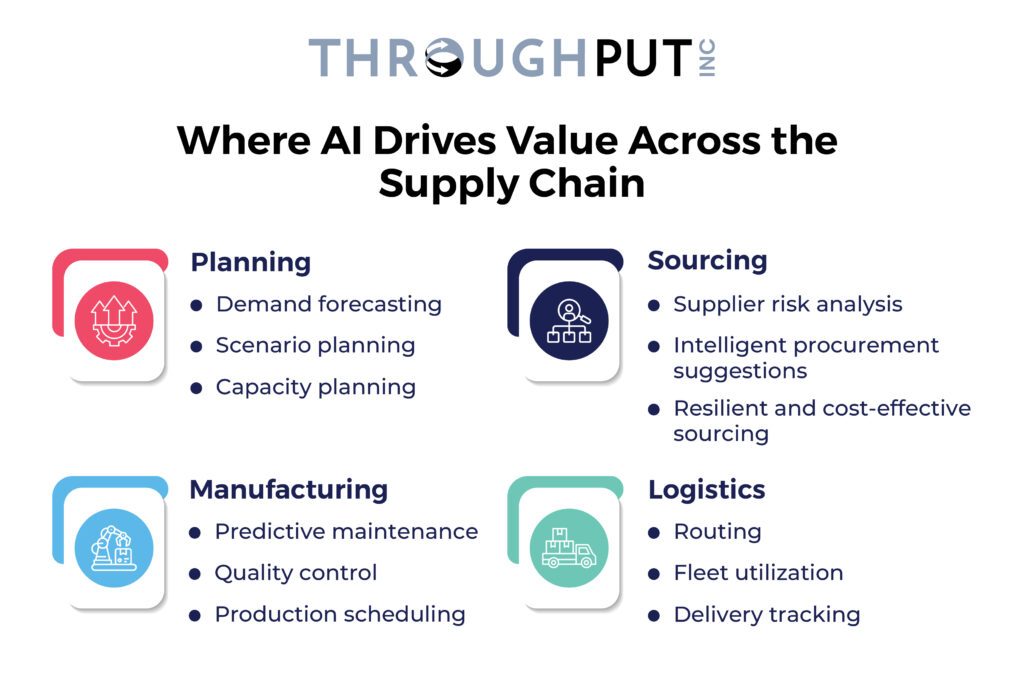
1. Where GenAI Drives Value in Planning
- AI optimizes sales and operations planning (S&OP)
- GenAI creates what-if scenarios based on demand shocks or raw material constraints
- NLP models convert emails, reports, and updates into structured plans
2. Where AI Drives Value in Sourcing
- Predicts supplier risks using news and social signals
- Dynamically recommends cost-efficient vendors
- Automates supplier scoring and bid evaluation
3. Where AI Drives Value in Manufacturing
- Predictive maintenance avoids unplanned downtime
- AI detects quality issues using computer vision
- Dynamic production scheduling based on actual demand
4. Where AI Drives Value in Logistics
- Optimize delivery routes based on traffic, weather, and cost
- Consolidate shipments for efficiency
- Reduce carbon emissions with intelligent load planning
Real-World Examples of AI in Supply Chain
- BASF uses AI to model its global logistics and reduce carbon footprint.
- BMW implemented AI to reduce defect rates in auto part manufacturing.
- ThroughPut.ai helped a leading CPG firm cut lead times by 27% using demand-sensing AI and dynamic replenishment.
Checklist: How to Prepare Your Supply Chain for AI
Use this step-by-step checklist to evaluate and accelerate your readiness for AI implementation across planning, sourcing, manufacturing, and logistics.
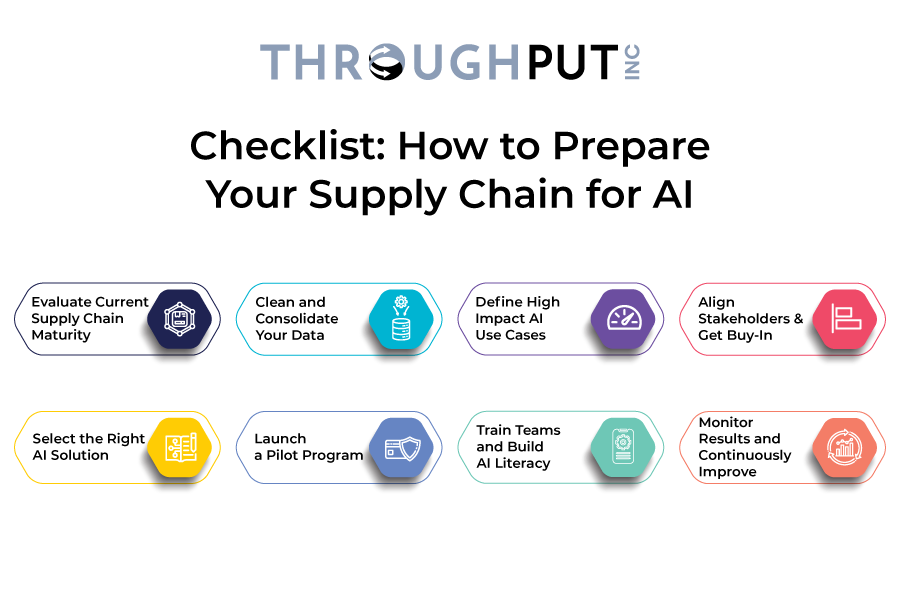
1. Evaluate Current Supply Chain Maturity
- Conduct a digital maturity assessment
- Identify gaps in automation and visibility
- Review current reliance on spreadsheets/manual tools
2. Clean and Consolidate Your Data
- Centralize data across ERP, WMS, TMS, CRM, etc.
- Resolve duplicates, missing fields, and format issues
- Set up real-time data access via APIs/integrations
3. Define High-Impact AI Use Cases
- Prioritize areas like forecasting, inventory, logistics, sourcing
- Validate use cases with tangible ROI and pain points
- Set success KPIs (e.g., lead time reduction, inventory turns)
4. Align Stakeholders & Get Buy-In
- Form an AI readiness team across departments
- Communicate benefits and realistic outcomes
- Secure executive sponsorship
5. Select the Right AI Solution
- Ensure it’s scalable and low-code/no-code
- Validate vendor’s experience in supply chains
- Confirm ease of integration with current tools
6. Launch a Pilot Program
- Run a focused 60–90 day AI pilot
- Monitor performance vs. pre-AI baseline
- Capture learnings and refine approach
7. Train Teams and Build AI Literacy
- Conduct workshops and walkthroughs
- Create an internal knowledge hub
- Empower “AI Champions” within teams
8. Monitor Results and Continuously Improve
- Track and review KPIs regularly
- Fine-tune data, models, and workflows
- Scale to additional regions/functions gradually
Pro Tip:
Save this checklist as your roadmap to align leadership, teams, and data for a successful AI transformation. Pair it with ThroughPut.ai to accelerate time-to-value.
Future of AI in Supply Chain
The future of Ai in supply chain is autonomous, intelligent, and self-optimizing.
Key trends include:
- AI-powered digital twins for simulation
- Autonomous planning systems
- Hyper-personalized demand forecasting
- Sustainable supply chain optimization
- AI copilots for real-time decision-making
AI Supply Chain Software & Consulting with ThroughPut
AI is only as good as its implementation. ThroughPut not only offers software—but consulting services to assess your current supply chain maturity and guide your AI journey.
Services include:
- Demand Sensing
- Capacity Planning
- Logistics Planning
- Inventory Management
- Digital Twin Bottlenecks Detection
- Replenishment Planning
- Sales and Operation Planning
- SKU Optimization
- Demand Segmentation
Invest in AI in Your Supply Chain operations with ThroughPut
Your supply chain is a strategic asset. With AI, you can transform it into a competitive advantage. ThroughPut helps businesses:
- Eliminate waste
- Increase throughput
- Serve customers faster and better
FAQs: AI in Supply Chain
- How is AI different from traditional supply chain software?
AI enables learning from data and proactive decision-making, unlike static rule-based systems. - How fast can we go live with ThroughPut’s AI platform?
Most customers begin seeing value in 30–60 days. - Do I need a data science team?
No. ThroughPut is low-code and comes with built-in intelligence. No heavy IT lift needed. - What if we already use SAP or Oracle?
ThroughPut integrates easily with most enterprise systems via API or connectors.